Hair Transplants

FUE, FUT & Combined Hair Transplants in London

Choosing a hair transplant is a considered decision that requires medical expertise, surgical precision and a clear understanding of what will look natural over the long term. At Fortes Clinic, we provide surgeon-led hair transplant care in London, combining advanced techniques with an artistic approach to hairline design and graft placement.

As a private hair transplant clinic in London, our focus is not on volume or sales-driven packages, but on carefully planned treatments tailored to each individual. Every stage of care is overseen by the surgeon responsible for your results, ensuring consistency, transparency and outcomes that remain natural as hair continues to mature.

Why choose Fortes Clinic for a Hair Transplant in London

Surgeon-Led Care

Every hair transplant at Fortes Clinic is planned and overseen by Dr Ahmad Saaed, from the initial consultation through to surgery and aftercare. This ensures consistent decision-making and accountability at every stage of treatment.

Precision and Natural Hairline Design

Hairline design is approached as both a surgical and aesthetic process. Careful planning of hair direction, density and placement allows results to look natural and remain appropriate over time.

Advanced Technology and Modern Techniques

The clinic uses modern hair transplant technology, including AI-assisted planning and high-resolution graft assessment, to support accurate donor selection and precise graft placement.

Luxury, Discreet Clinical Setting

Located in Little Venice, London, Fortes Clinic offers a calm, private environment designed to prioritise comfort, discretion and personalised care throughout the treatment process.

Structured Aftercare and Follow-Up

Aftercare is an integral part of treatment, with post-operative guidance and scheduled follow-ups to monitor healing and hair growth as results develop.

Hair Transplant Options Available at Our London Clinic

We offer a range of hair transplant procedures in London, selected based on individual needs rather than a one-size-fits-all approach. The most appropriate method is determined during consultation following a detailed assessment.

FUE Hair Transplant

Rectangle 1323 (4) (1)

Follicular Unit Extraction involves the careful removal of individual hair follicles from the donor area and their precise placement into areas of thinning or hair loss. This technique allows for controlled graft placement and natural-looking results across a wide range of hair loss patterns.

Rectangle 1323 (4) (1)
Rectangle 1323 (3) (1)

FUT Hair Transplant

Rectangle 1323 (3) (1)

Follicular Unit Transplantation may be recommended in selected cases where donor characteristics or graft requirements make it appropriate. This method allows for efficient harvesting while maintaining a focus on long-term donor management.

Combined FUE and FUT Hair Transplant

Rectangle 1323 (5) (1)

In more advanced cases of hair loss, a combined approach using both FUE and FUT techniques may be considered. This allows for maximising graft numbers while maintaining balance within the donor area, guided by careful surgical planning.

Rectangle 1323 (5) (1)

Who May Be Suitable for a Hair Transplant

Hair transplant surgery in London can be suitable for both men and women experiencing different types and patterns of hair loss. Suitability is assessed individually, taking into account donor hair availability, scalp condition, hair loss stability and long-term expectations.

Hair Transplant for Men

Male pattern hair loss commonly affects the frontal hairline, temples and crown, progressing gradually over time. Hair transplant surgery can be used to restore density and redefine the hairline in a way that remains natural as hair continues to mature.

Hair Transplant for Women

Hair loss in women often presents as diffuse thinning or widening of the part rather than isolated bald areas. Female hair transplant treatment requires careful assessment and precise graft placement to improve density while preserving existing hair.

Eyebrow Hair Transplant

Eyebrow hair loss may occur due to over-plucking, scarring, medical conditions, or previous cosmetic procedures. Eyebrow hair transplant treatment focuses on restoring natural shape, direction and density with close attention to hair growth patterns.

Hair Loss from Other Causes

Hair loss can also result from scarring, trauma, medical treatments, or stress-related conditions. In these cases, suitability depends on the underlying cause and the condition of the affected area, which is assessed during consultation.

Your Journey

The Hair Transplant Process at Fortes Clinic

Every hair transplant at our London clinic follows a structured and carefully managed process designed to prioritise accuracy, safety and natural results.

Logo (6)

Consultation and Hairline Design

Treatment begins with a detailed, surgeon-led consultation. Hair loss patterns, donor availability, scalp condition and future progression are assessed before a bespoke hairline is designed to complement facial structure and age.

Donor Area Selection

Donor follicles are selected strategically to maintain an even appearance and avoid visible thinning. Extraction is performed in a randomised pattern to preserve donor integrity for both current and potential future treatments.

Precise Graft Placement

Each graft is implanted individually at carefully controlled angles and directions to replicate natural hair growth. Attention to placement and density distribution is essential for seamless integration with existing hair.

Aftercare and Recovery Timeline

Aftercare begins immediately following the procedure and includes detailed guidance, the first post-operative hair wash and scheduled follow-up appointments. Initial shedding is expected, with new growth developing gradually over the following months.

What Results Can You Expect from a Hair Transplant

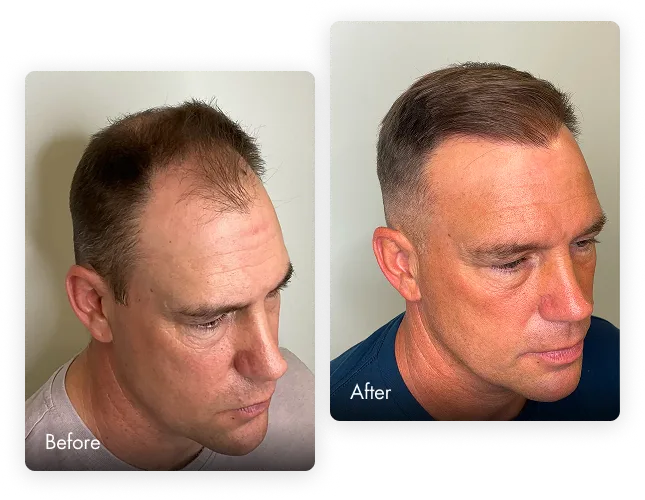
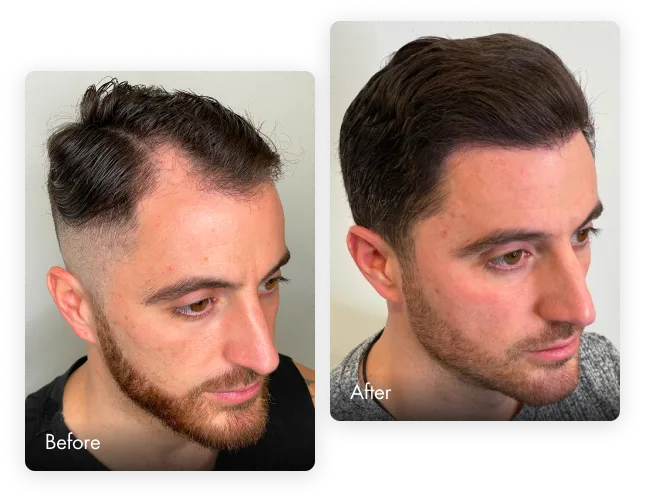
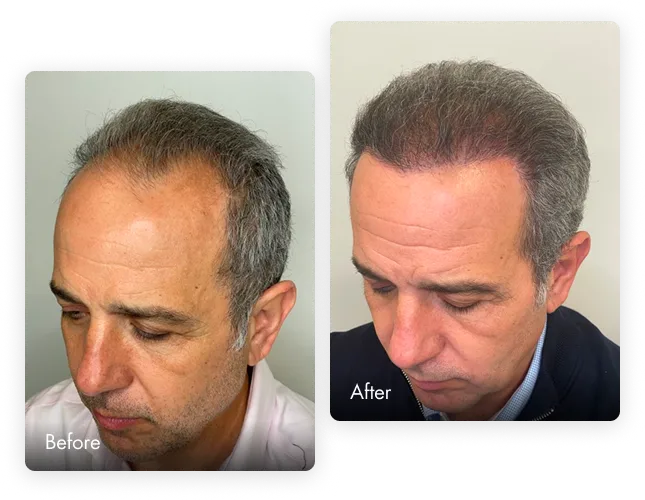
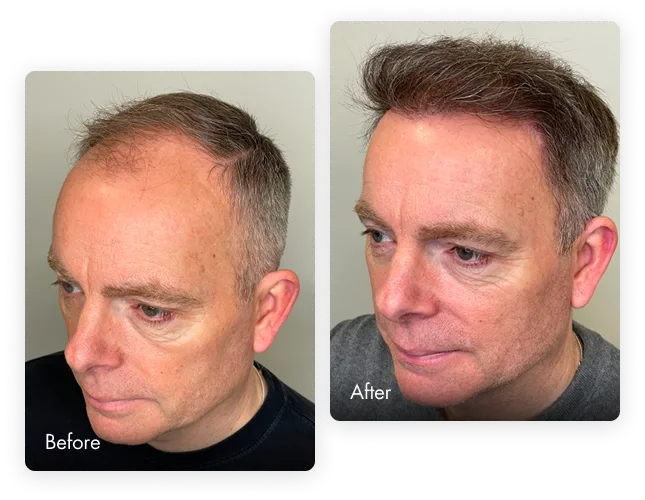
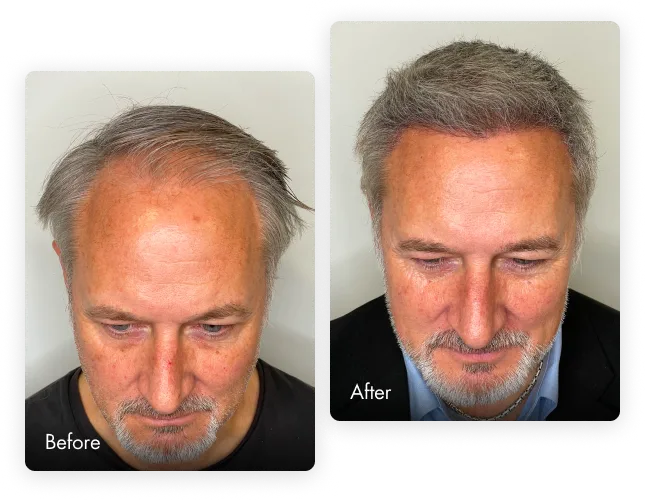
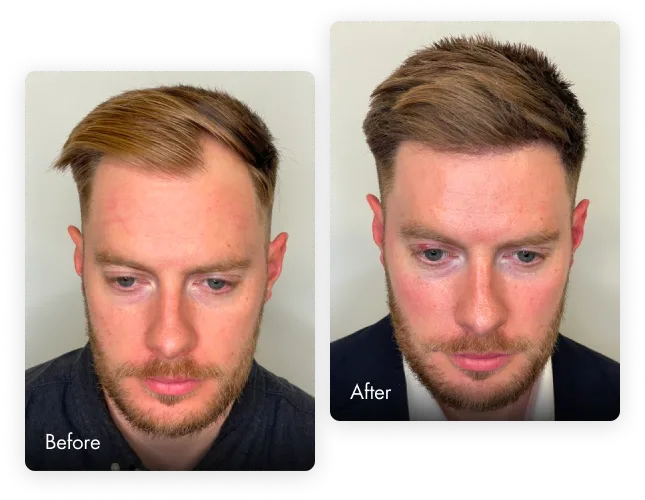
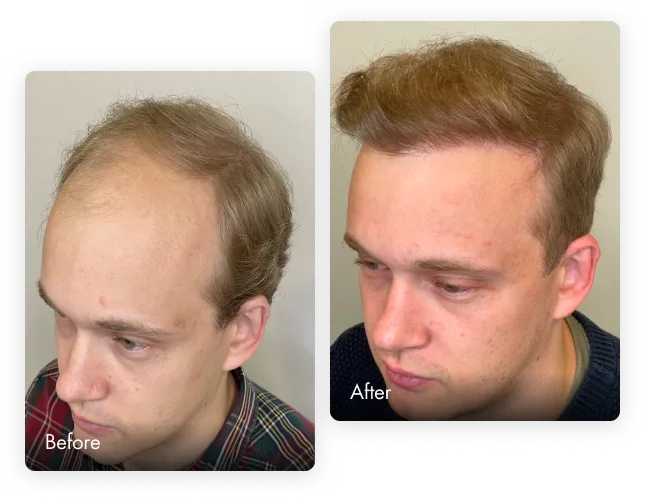
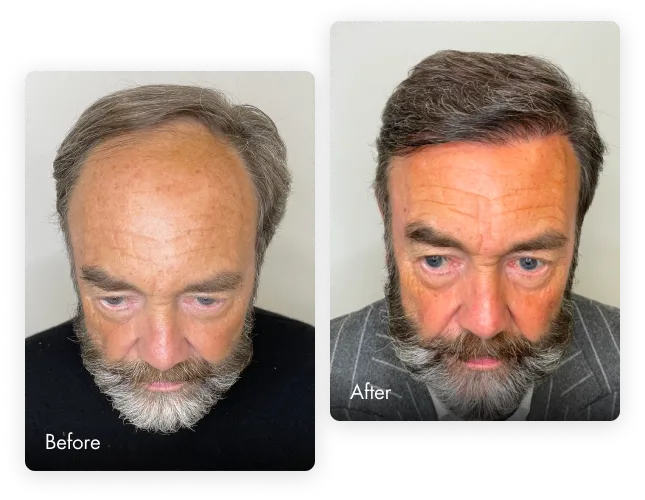
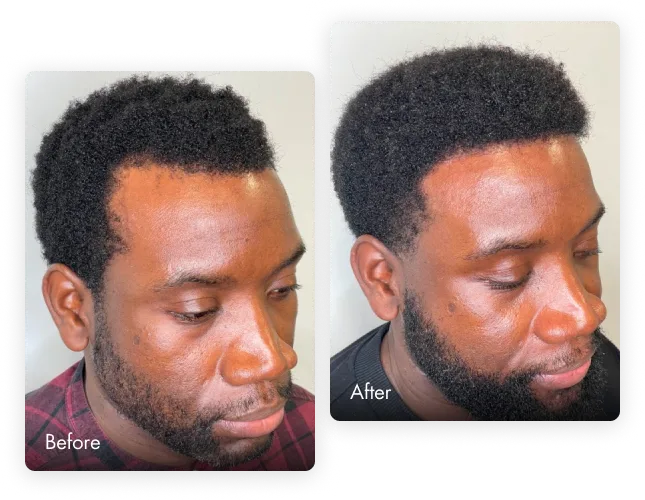
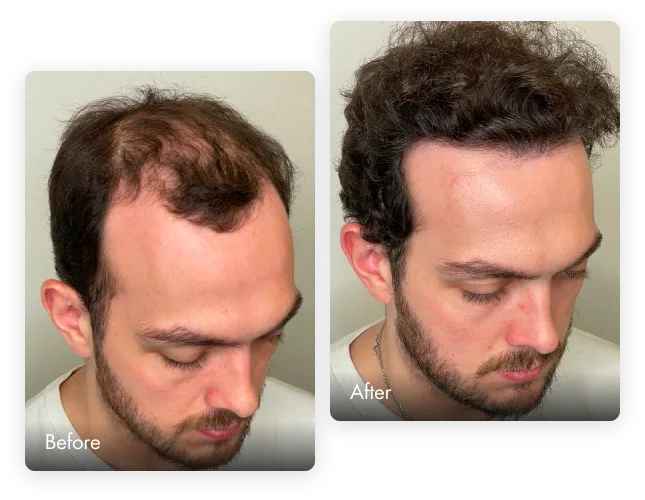
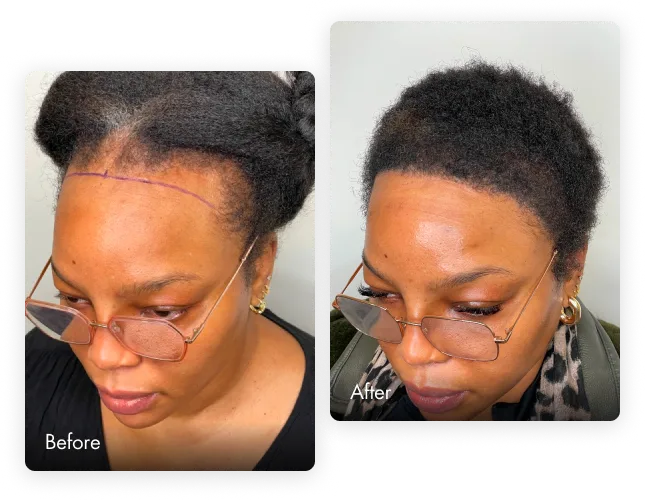
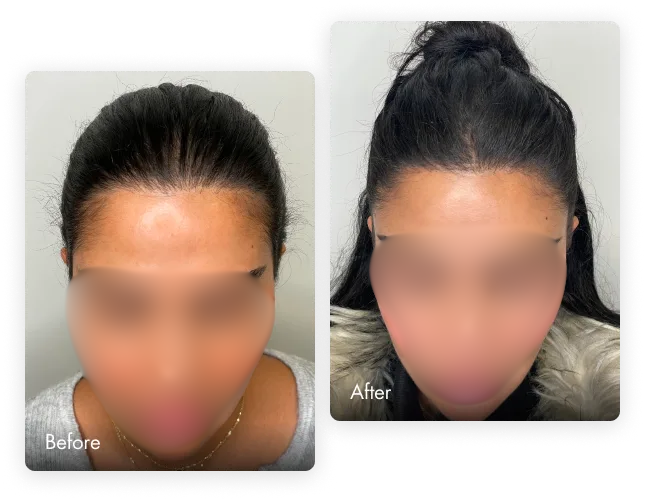
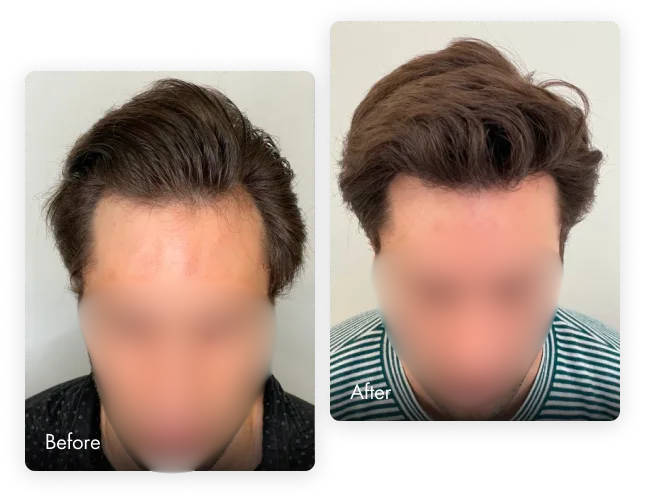
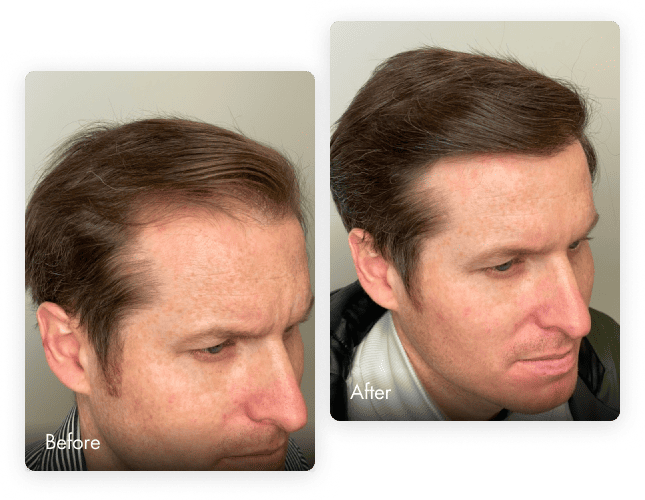
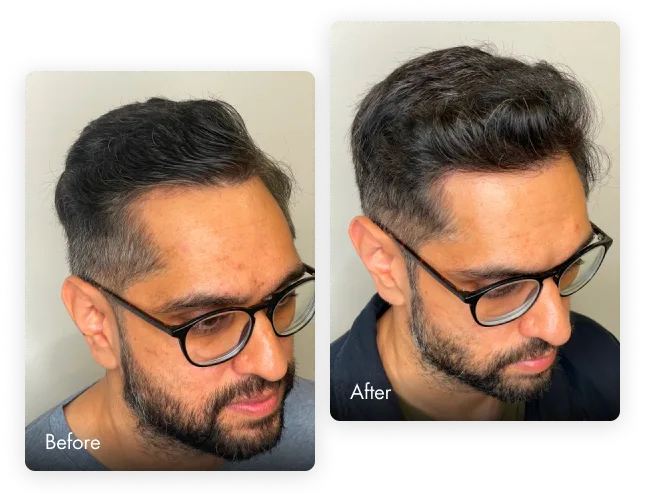
Hair transplant results develop progressively and vary between individuals. While early changes may be noticeable within the first few months, the final outcome continues to mature over time. The goal of treatment is a natural appearance that integrates with existing hair rather than an artificial or overly dense result. Careful planning, precise execution and adherence to aftercare guidance all play a role in achieving consistent, long-term outcomes.

The images above are displayed with the consent of the patients. The outcomes shown are only relevant for these patients and do not necessarily reflect the results other patients may experience. Our team will discuss any factors that could influence the results that you may get.

Frequently Asked Questions

Who is a good candidate for a hair transplant?

A hair transplant may be suitable for men and women with stable hair loss and sufficient donor hair. Suitability is determined during consultation based on hair loss pattern, scalp condition and long-term expectations.

Hair transplant results develop gradually over several months. Initial growth is typically seen within the first few months, with continued improvement as the hair matures over time.

Natural results depend on careful planning, hairline design and precise graft placement. When performed with attention to hair direction, density and facial proportions, results are designed to blend seamlessly with existing hair.

Choosing the right clinic involves looking beyond price and focusing on surgeon involvement, experience, treatment planning and aftercare. A consultation should provide clear, realistic guidance rather than sales-driven recommendations.

Hair transplant surgery is generally well tolerated, with local anaesthetic used to minimise discomfort during the procedure. Some mild soreness or tightness may be experienced afterwards, which typically settles as healing progresses.

Request a Consultation with Dr Saaed

Begin with a private, clinician-led consultation to discuss suitability, options, and expected outcomes.