MEN HAIR LOSS TREATMENT
Did you know that 85% of men experience significant hair thinning by the age of 50? Even worse, for some men, hair loss could start even before they are 21 years old. You should, however, know that when hair loss begins, it’s not a slippery slope. It’s a somewhat gradual process that takes about 20 years before you go completely bald. But then again, for some men, it could take them as little as 5 years. And unfortunately, there’s no sure-fire way of knowing how long it will take! Male baldness is the most common way in which men lose their hair. So there is a definite need for Hair Loss Treatment For Men. Here’s a look at what it’s all about and what science says as well.
Male Pattern Baldness
Male pattern baldness leads to the diminishing of at the top front and crown of the scalp; a section referred to as the ‘non-permanent’ area. With time, the baldness grows and extends to the back and sides of the head. This usually leads to permanent baldness. You should know that in most cases, baldness is hereditary, and if it was meant to affect you, it definitely will.

The Science Bit
The male hormone dihydrotestosterone (DHT) stimulates the hormone receptors at the front top crown of the scalp. This is generally considered as the non- permanent area. The hormone will then alter the life cycle of the hair roots, and this leads to hair loss as hair cannot grow anymore. Take note that the hair cycle is made up of a “growing phase” that takes up to 7 years. There is also the ‘resting phase’ that lasts about 3-4 months. The hormones released will typically turn the cycle around, making a growing phase shorter and on the other hand, increases the resting phase. This will eventually leave your head with little or no hair left.
Types of MEN’s HAIR LOSS
The Norwood Classification of Hair Loss in Men. Here’s a highlight of the classed of hair loss that affects men. And you need to know that there are different Hair Loss Treatment For Men; depending on the pattern of hair loss.

Stage 1: No Hair Loss
A youthful hairline with no hair loss, resting above the upper forehead — the baseline reference stage.

Stage 2: Slight Recession
An adult hairline forms about 1.5 cm from the upper forehead crease, accompanied by slight temporal recession.

Stage 3: Treatment Advised
Temporal recession increases to a clinically significant point — the earliest stage where treatment is advisable.

Stage 3 Vertex: Crown Thinning
Hair loss emerges at the crown of the scalp as the first visible thinning in the vertex (top) region.

Stage 4: Crown & Front Loss
Further loss progresses at both the crown and the front of the head, with a dense band of hair still separating the two areas.

Stage 5: Expanding Bald Zones
Hair loss intensifies; the bald regions at the front and crown both enlarge while the dividing strip of hair narrows considerably.

Stage 6: Bald Zones Merge
The bridge dividing the two bald zones disappears entirely, leaving a small isolated patch of hair at the top of the scalp.

Stage 7: Advanced Hair Loss
The most advanced stage — intense hair loss with only a narrow horseshoe-shaped band remaining at the permanent region.
Sideburns
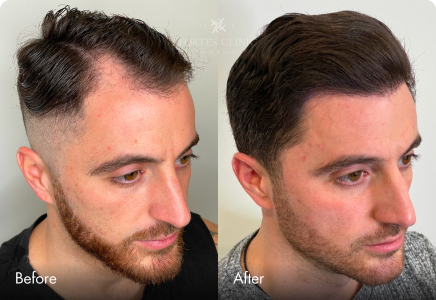
Sideburns are a remarkably stylish hairline that a lot of men often desire to have. Since not everyone can naturally grow a sideburn, a lot of interest has been developed by men in this area. With the new fashion trends focusing on looking sharp by keeping well-trimmed and stubble facial hair, men are now seeking the services of hair treatments to suit in the most modern trending styles. The sideburn men hair transplant surgery involves taking hair from the scalp and surgically inserting them at the desired regions one follicle at a time. The hair will then naturally grow on its own, giving you the desired sideburn look. With the help of an optimum men hair transplant surgery, you can get the desired results.
Moustaches and Beards
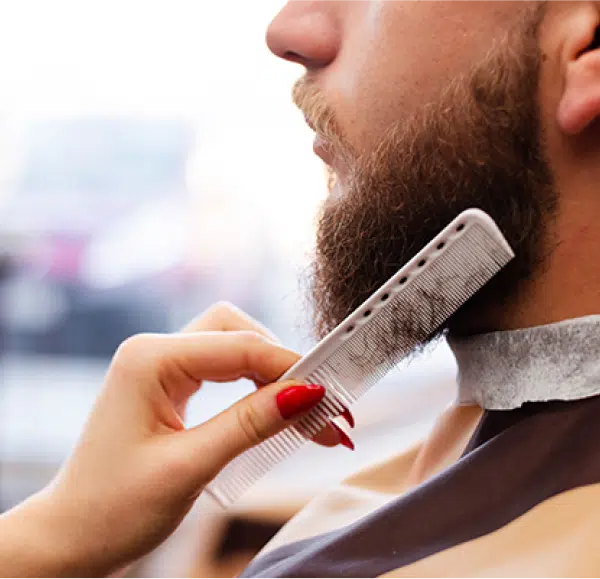
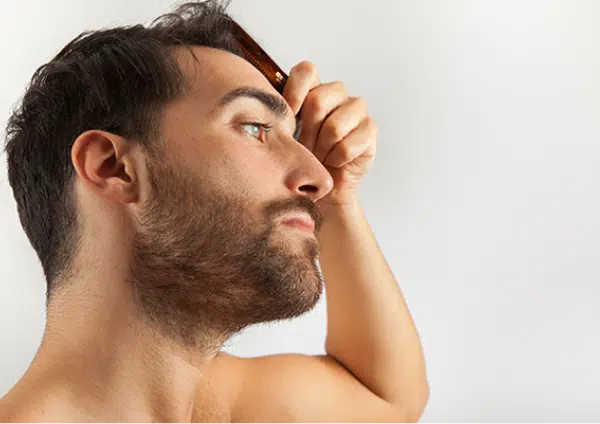
As cool as sideburns are, for a lot of men today, beards are considered to be exquisite facial ornaments; the Watson to the Sherlock Holmes of the face – for lack of a better analogy. Moreover, across many cultures, a thick moustache and beard are considered a symbol of toughness, power, and wit. It’s no wonder why being in the beard-gang bandwagon will forever be a fashion trend for men. Before going for any kind of hair transplant surgery or facial hair transplant surgery, consult a recognised consultant first. Regrettably, there are plenty of men with sparse and patchy facial hair because of one reason or the other. Fortunately, through hair transplants for men, you can attain the desired facial look, with a full beard. Facial transplants for the beards and moustaches involve the extraction of hair from the scalp and carefully inserting it in the regions that need the extra strands of hair. Men who were previously lacking in facial hair can now join the beard-gang movement with elegantly bushy beards and well-trimmed moustaches. Oh, and in case you didn’t know, facial hair can also be used for scalp transplants too! All you need to get specific details regarding Hair Transplant For men.