Table of Contents
ToggleIntroduction
Male pattern baldness is a common condition that affects a significant number of men worldwide. It can have a profound impact on a person’s self-esteem and overall well-being. In this article, we will explore the intricacies of male pattern baldness, including its causes, signs, and treatment options. By understanding this condition better, men can make informed decisions about managing and coping with hair loss.Understanding Male Pattern Baldness
Male pattern baldness, also known as androgenetic alopecia, is a specific pattern of hair loss that primarily affects men. It typically follows a predictable pattern, starting with a receding hairline and thinning of hair on the crown. To comprehend male pattern baldness fully, it’s essential to understand the natural hair growth cycle.Hair Growth Cycle
Our hair goes through a continuous cycle of growth, rest, and shedding. The growth phase, known as anagen, lasts for several years, during which the hair follicles produce new hair strands. This is followed by the catagen phase, a brief transitional period, and then the telogen phase, where the hair follicles rest before shedding the old hair. Male pattern baldness disrupts this cycle, leading to hair follicles shrinking over time.Causes of Male Pattern Baldness
Male pattern baldness can be attributed to a combination of genetic, hormonal, and environmental factors. Understanding these causes can shed light on why some men are more prone to hair loss than others.Genetic Factors
Genetics plays a significant role in male pattern baldness. If your close family members, such as your father or grandfather, have experienced hair loss, you may be genetically predisposed to it. The inheritance of certain genes can make your hair follicles more sensitive to the hormone dihydrotestosterone (DHT), leading to their shrinkage.Hormonal Factors
DHT, a byproduct of testosterone, is a hormone responsible for the development of male characteristics. In individuals with a genetic predisposition, DHT can bind to the hair follicles’ receptors, causing them to shrink and produce thinner, shorter hair strands. This hormone sensitivity varies from person to person and determines the extent of hair loss.Age
As men age, the likelihood of experiencing male pattern baldness increases. It is estimated that around two-thirds of men will experience some degree of hair loss by the age of 35, and by the age of 50, approximately 85% of men will have significant hair thinning.Medical Conditions
Certain medical conditions, such as thyroid disorders and autoimmune diseases, can contribute to hair loss. Additionally, treatments like chemotherapy for cancer and some medications may cause temporary or permanent hair loss.Signs and Symptoms of Male Pattern Baldness
Male pattern baldness typically follows a distinctive pattern, which can help identify and differentiate it from other types of hair loss.Receding Hairline
One of the primary signs of male pattern baldness is a receding hairline. The hairline gradually moves higher on the forehead, forming an “M” shape.Thinning Hair on the Crown
As the condition progresses, men often notice thinning of hair on the crown or top of the scalp. This thinning can eventually lead to partial or complete baldness in that area.Hair Loss Progression
Male pattern baldness usually starts with the hairline recession and crown thinning, and over time, the two areas merge, resulting in a more extensive balding pattern. However, hair loss varies among individuals, and the progression can be slow or rapid.Norwood Scale Classification
To assess and classify the extent of male pattern baldness, doctors often use the Norwood scale. This scale categorises the hair loss patterns into various stages, ranging from minimal hair loss to severe baldness.Diagnosing Male Pattern Baldness
If you suspect that you are experiencing male pattern baldness, it is crucial to consult a healthcare professional for an accurate diagnosis. The following methods are commonly used to diagnose this condition.Medical History and Physical Examination
During the initial consultation, your doctor will review your medical history and inquire about any family history of hair loss. They will also examine your scalp and hair to assess the pattern and extent of hair loss.Scalp Biopsy
In some cases, a scalp biopsy may be performed to rule out other causes of hair loss. A small sample of your scalp skin is taken and examined under a microscope to determine the underlying cause.Blood Tests
Blood tests may be recommended to check for any underlying medical conditions, such as hormonal imbalances or nutritional deficiencies, that could contribute to hair loss.Treatment Options for Male Pattern Baldness
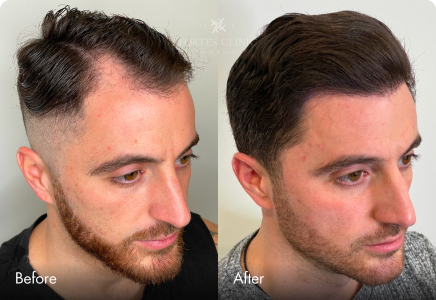
While male pattern baldness cannot be completely cured, several treatment options can help slow down hair loss, promote hair regrowth, and improve the appearance of thinning hair.Medications
- Finasteride (Propecia): This prescription medication works by reducing the levels of DHT in the scalp, thereby slowing down hair loss and promoting regrowth.
- Minoxidil (Rogaine): Available over the counter, minoxidil is a topical solution or foam that is applied directly to the scalp. It stimulates hair follicles, prolongs the hair growth cycle, and can lead to increased hair density.